How Long Does Kratom Stay in Your System?

How Long Does Kratom Stay in Your System?
Kratom is a tropical plant native to Southeast Asia, known for its active compounds that produce both stimulant and sedative effects depending on dosage. As kratom becomes more widely used in the U.S., especially in wellness and recreational spaces, many users are curious about how long it stays in the body. This question is especially relevant for those concerned with drug tests, safety, or proper usage timing.
While kratom is not usually screened for in standard drug panels, its alkaloids can still be detected under certain conditions. Understanding how long kratom remains in your system involves several factors, including the form taken, the dose, and your body’s metabolism.
This guide breaks down what current research suggests about kratom’s detection windows, the science behind its metabolism, and the key factors that influence how long it lingers in your system.
Disclaimer: The information in this article is for educational purposes only and has not been evaluated by the Food and Drug Administration (FDA). Kratom is not intended to diagnose, treat, cure, or prevent any disease. Always consult a healthcare professional before using any supplement.

Average Time Kratom Stays in the System
The length of time kratom remains in your body can vary widely, regardless of how you consume, depending on several factors, but typical detection windows fall within a general range.
- Urine: Kratom alkaloids can usually be detected in urine for up to 5–7 days after use. Chronic users may have a longer window, while one-time or occasional users may fall on the shorter end of the range.
- Blood: In blood tests, kratom is typically detectable for 1–2 days. Because blood testing has a shorter detection window, it’s less commonly used for kratom.
- Saliva: There’s limited data on saliva testing for kratom. However, if detectable, the timeframe is likely within 24 hours of ingestion.
- Hair: As with most substances, kratom could potentially be detected in hair for up to 90 days, but hair testing for kratom is rare and not widely used.
These timeframes are averages and should be treated as estimates rather than guarantees. Individual physiology and use patterns make a big difference.
Factors That Influence Detection Time
The time kratom stays in your system isn’t the same for everyone. Several personal and usage-related factors play a major role in how quickly your body metabolizes and eliminates kratom’s active compounds.
- Dosage: Higher doses mean more alkaloids in your system, which can take longer to process and eliminate.
- Frequency of Use: Regular or long-term users may experience a buildup of kratom in their body, which can extend detection times.
- Metabolism: People with faster metabolic rates typically process and eliminate substances more quickly than those with slower metabolism.
- Body Fat Percentage: Kratom’s alkaloids are fat-soluble, meaning they may stay longer in individuals with higher body fat.
- Age: As metabolism tends to slow with age, older individuals may retain kratom longer than younger users.
- Hydration and Diet: Staying hydrated and maintaining a healthy diet can support the body’s natural detoxification processes.
- Liver and Kidney Function: Because these organs help break down and eliminate substances, impaired function can slow clearance of kratom from the system.
Everyone’s body is different, so even with these general guidelines, detection time can vary from person to person.

How Kratom Is Metabolized
Kratom’s effects come primarily from two alkaloids: mitragynine and 7-hydroxymitragynine. Once ingested, these compounds are processed mainly in the liver before being eliminated through the kidneys.
- Liver Metabolism: Mitragynine is metabolized in the liver by cytochrome P450 enzymes, especially CYP3A4. These enzymes convert mitragynine into various metabolites, including 7-hydroxymitragynine. This process can be influenced by other substances that affect liver enzyme activity—such as certain medications, grapefruit juice, or alcohol.
- Elimination: Once broken down, kratom’s metabolites are excreted through urine. The body’s ability to eliminate these substances depends on hydration levels, liver and kidney health, and overall metabolic rate.
- Half-Life Estimates: Although more research is needed, mitragynine is believed to have a half-life of about 24 hours, meaning it could take several days to be fully cleared, especially for regular users.
Understanding kratom’s metabolism helps explain why detection windows can vary and why factors like dosage and frequency of use make a difference.
Kratom Drug Testing: Can It Show Up?
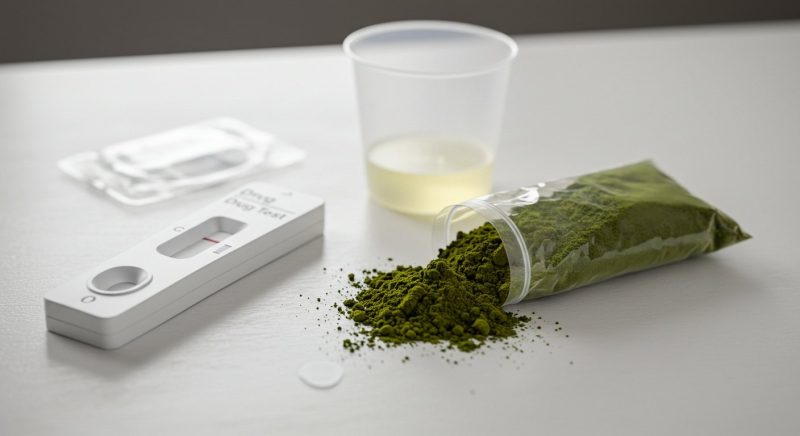
Standard drug tests, like the 5-panel or 10-panel urine screens used by employers, do not test for kratom. However, kratom can still be detected if a test is specifically designed to look for its compounds.
- Standard Panels: Kratom is not included in the most commonly used workplace drug tests, which focus on substances like THC, cocaine, opiates, amphetamines, and PCP.
- Specialized Testing: Labs can test for kratom’s active alkaloids, primarily mitragynine, through advanced methods such as liquid chromatography-mass spectrometry (LC-MS).
- When It Might Be Tested: Kratom may be included in a toxicology screen during medical examinations, legal cases, or research studies where full-spectrum substance testing is requested.
- False Positives: Kratom is not known to cause false positives for other drugs on standard panels, but cross-reactivity is always a possibility with cheaper or outdated tests.
Unless a test is specifically configured to detect kratom or its alkaloids, it will likely go unnoticed in most routine screenings.
Tips for Responsible Use & Detoxing
If you’re looking to support your body in clearing kratom naturally—or simply want to practice mindful, responsible use—these tips can help:
- Stay Hydrated: Drinking plenty of water supports kidney function and helps flush metabolites from your system.
- Eat Clean: A diet rich in fiber, fruits, and vegetables aids liver detoxification and overall health.
- Exercise Regularly: Physical activity boosts circulation and metabolism, which can help speed up elimination of kratom’s alkaloids.
- Avoid Combining with Other Substances: Alcohol and certain medications can strain the liver and slow down kratom metabolism.
- Take Breaks: If using kratom regularly, consider occasional tolerance breaks to reduce build-up and support more predictable effects.
- Sleep Well: Quality sleep allows the body’s natural detox pathways to function optimally.
These are general wellness strategies—not medical advice—and results can vary based on your unique physiology. When in doubt, consult a healthcare professional before making changes to your routine.